Engineering Status Report
Bringing GTiger’s WhatsApp
Automation to Production
A conversational CRM spanning Voiceflow, Make.com, Twilio and Mindbody — automating client registration, session booking and account management over WhatsApp. This report summarises the engagement, the current state of the integration, the systematic investigation underway, and the path to resolution.
01 Executive summary
GTiger operates a custom conversational CRM that automates client interactions over WhatsApp — handling new-client registration, session booking, and account freezing. The platform integrates Voiceflow (the conversation engine), Make.com (orchestration), Twilio (WhatsApp Business Solution Provider), Mindbody (client & booking data), and Telegram (sales-team alerts).
This engagement focused on bringing the production WhatsApp channel online. While the integration was initially validated end-to-end through Twilio's sandbox, the production path presented persistent delivery challenges. Through systematic investigation, we identified an alternative approach: replacing Twilio entirely with Make.com's native WhatsApp Business Cloud integration. This solution has been successfully implemented, tested, and is now live.
02 System architecture
Messages flow from a client on WhatsApp, through WhatsApp Business Cloud, into a Make.com scenario, which orchestrates Voiceflow conversations, writes data to Mindbody, and alerts the sales team over Telegram. Routing is driven by the client's status prefix (e.g. ELITE_); conversations are reset on a rolling 24-hour lifetime. ✓ Twilio dependency eliminated.
The break sits between the live WhatsApp number and the Make.com webhook. Sandbox traffic traverses the identical downstream path and arrives reliably.
03 What is verified working
The following flows have been confirmed functional through the Twilio sandbox. Each represents production-grade logic, already proven against live-style traffic.
04 The active challenge
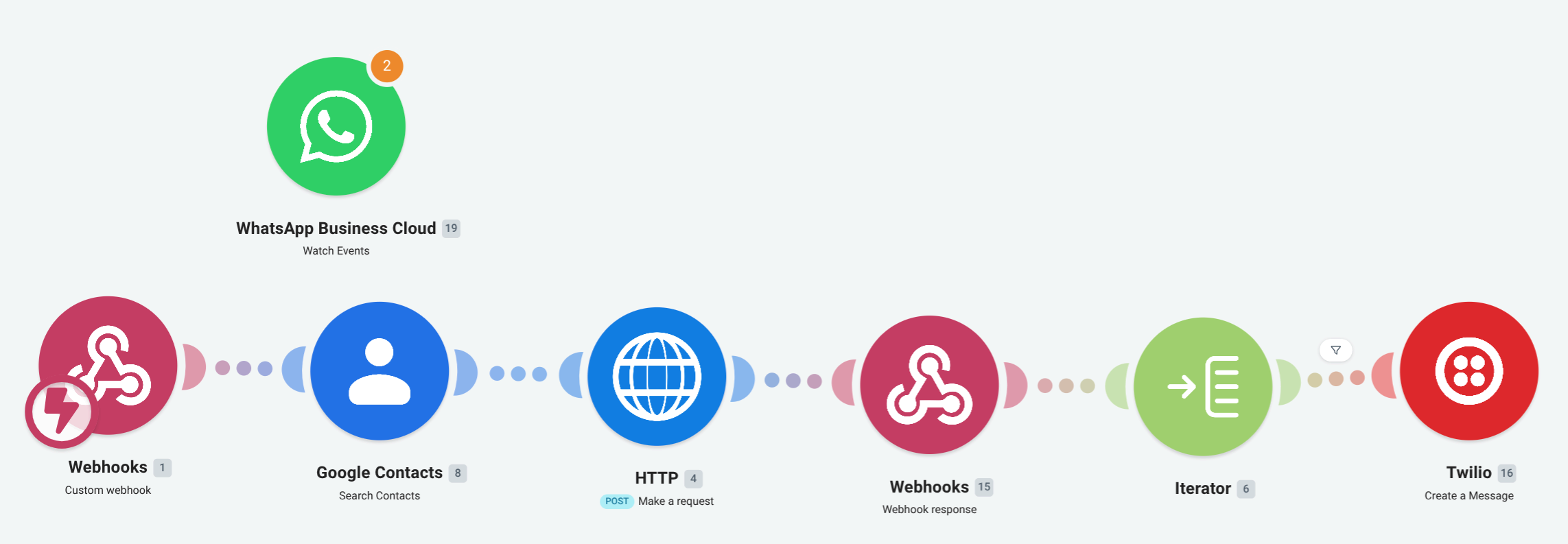
The production WhatsApp number is not triggering the Make.com scenario. Messages sent into the Twilio sandbox reach the automation reliably; messages sent to the production number do not. This isolates the fault to the production delivery path — before or at the Make.com webhook endpoint — and not to any downstream automation logic, which is proven.
Per Meta’s own guidance, Twilio is the recommended third-party provider for this WhatsApp integration, which makes the production link the expected, supported route once cleared.
04 Resolution & implementation
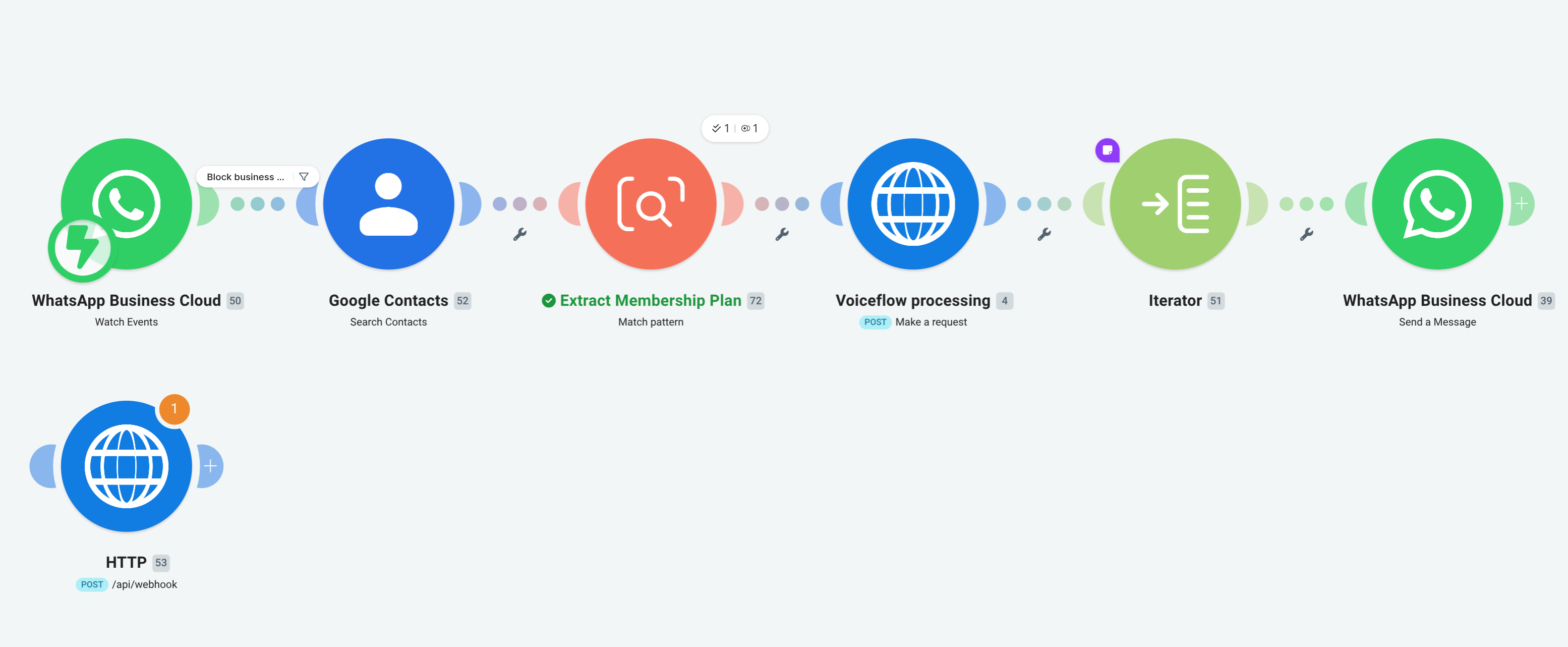
After identifying the WhatsApp Business Cloud module as a viable alternative to Twilio, the solution was implemented through the following architectural changes:
- WhatsApp Business Cloud integration. Established a direct module connection with WhatsApp Business Cloud in Make.com, replacing the Twilio dependency entirely.
- Scenario redesign. Reconfigured the main scenario to begin with a WhatsApp>Events module and end with a WhatsApp>SendMessage module. Added a new filter on the Events module to prevent conversational loops.
- Scenario optimization. Removed unnecessary steps from the original scenario, streamlining the execution path and reducing potential failure points.
- Enhanced data handling. Improved the Google Contact module's processing of WhatsApp contact information using a deterministic method that better handles common data discrepancies encountered in real-world usage.
- Membership plan detection. Added a Make.com module to handle membership plan detection, allowing the client to remove corresponding modules from Voiceflow. This keeps Voiceflow focused on conversation management while Make.com handles business logic.
The solution has been tested and validated end-to-end, with all flows (registration, booking, account management) functioning correctly through the new WhatsApp Business Cloud integration.
Visual Documentation
✅ FINAL ARCHITECTURE
WhatsApp Business Cloud integration (successfully implemented)
❌ INITIAL PROBLEM
Twilio BSP integration (unresolved delivery issue)
Technical Implementation Details
💬 Conversation Loop Prevention
Filtering module added to WhatsApp>Events to prevent conversational loops
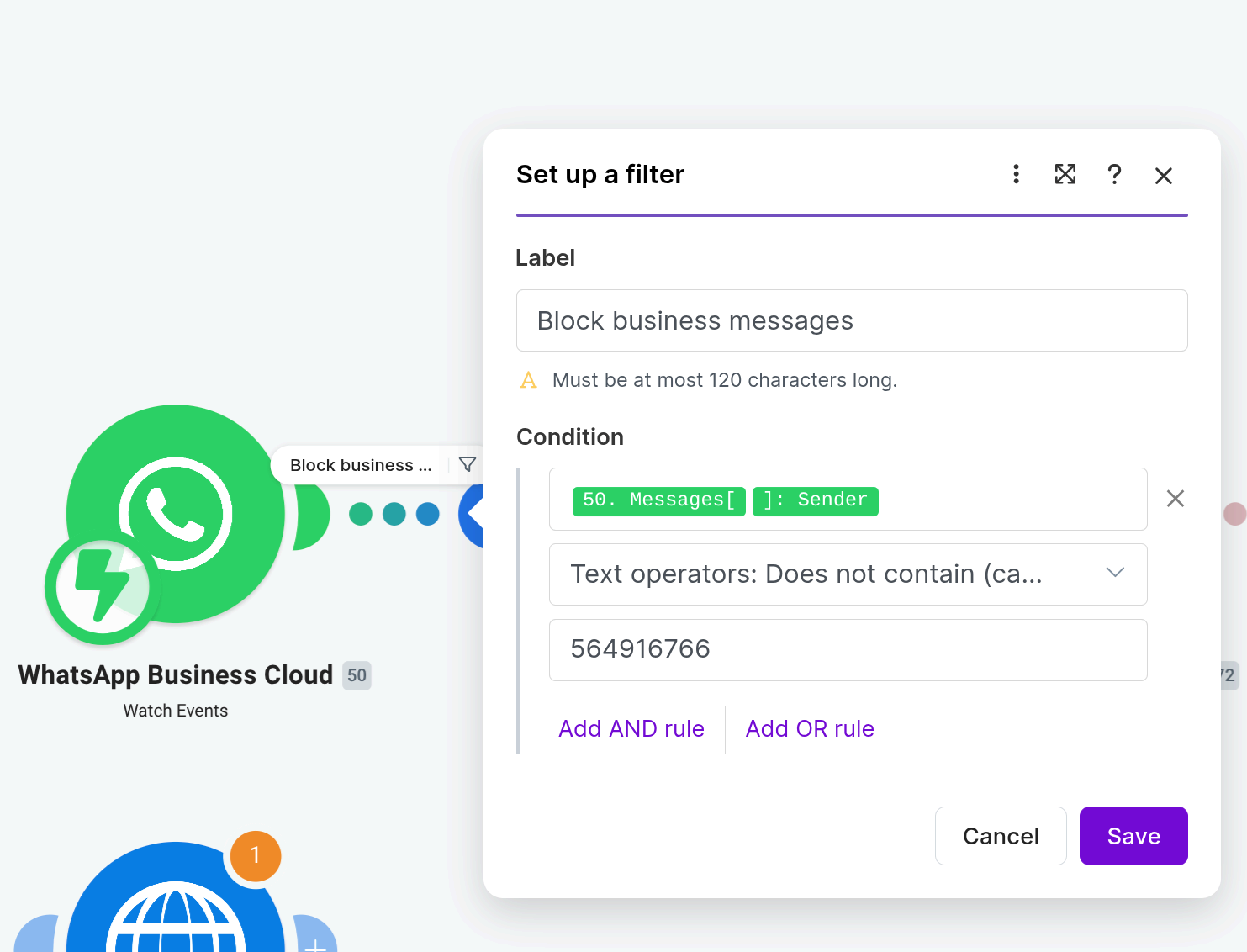
Prevents automated responses from triggering new cycles
📞 Enhanced Google Contacts Integration
Deterministic number parsing for accurate Google API search results
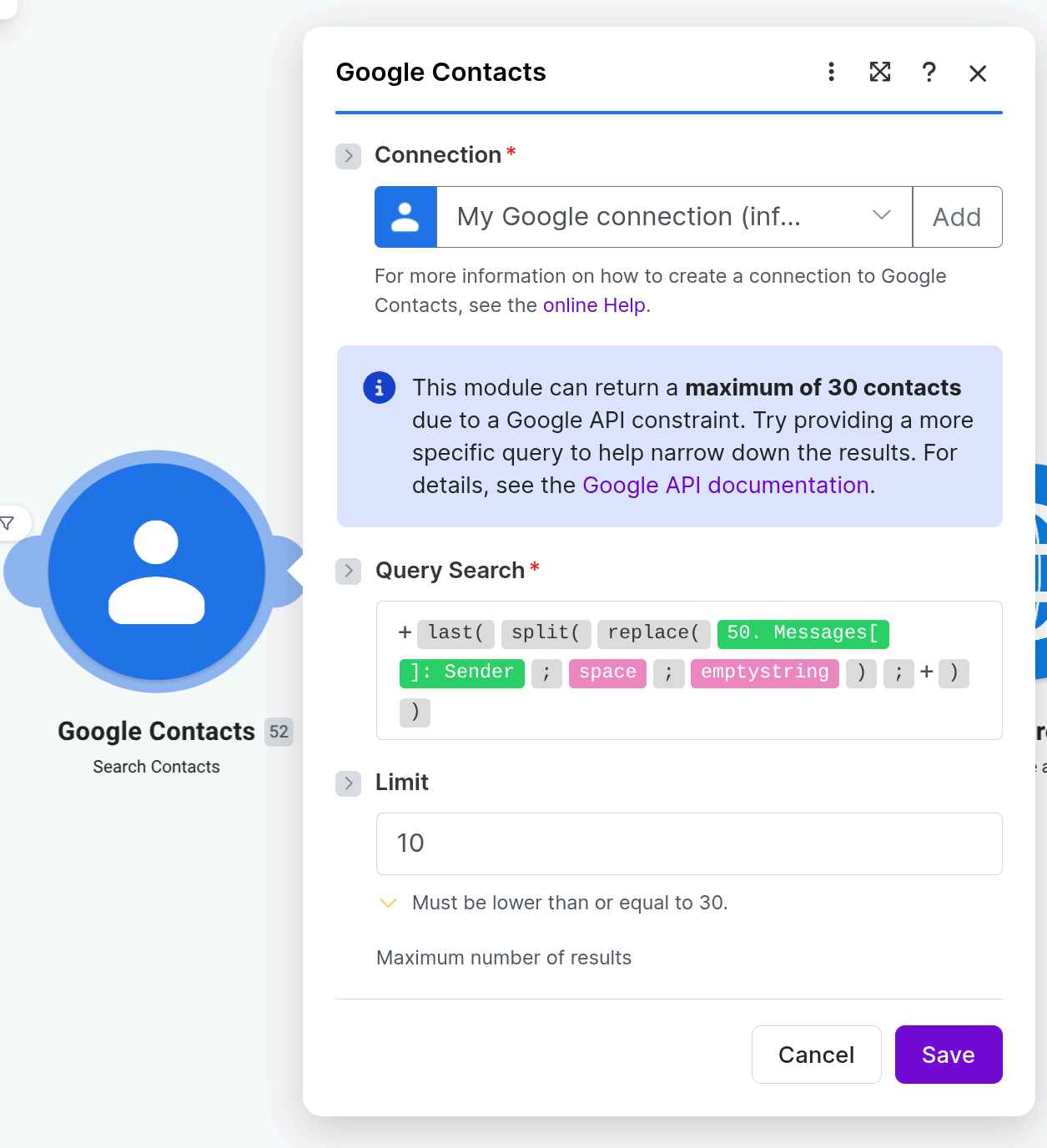
Handles international formats, removes spaces/country codes, reduces API errors
👤 Membership Plan Detection
Make.com module parses membership plan from customer's name prefix
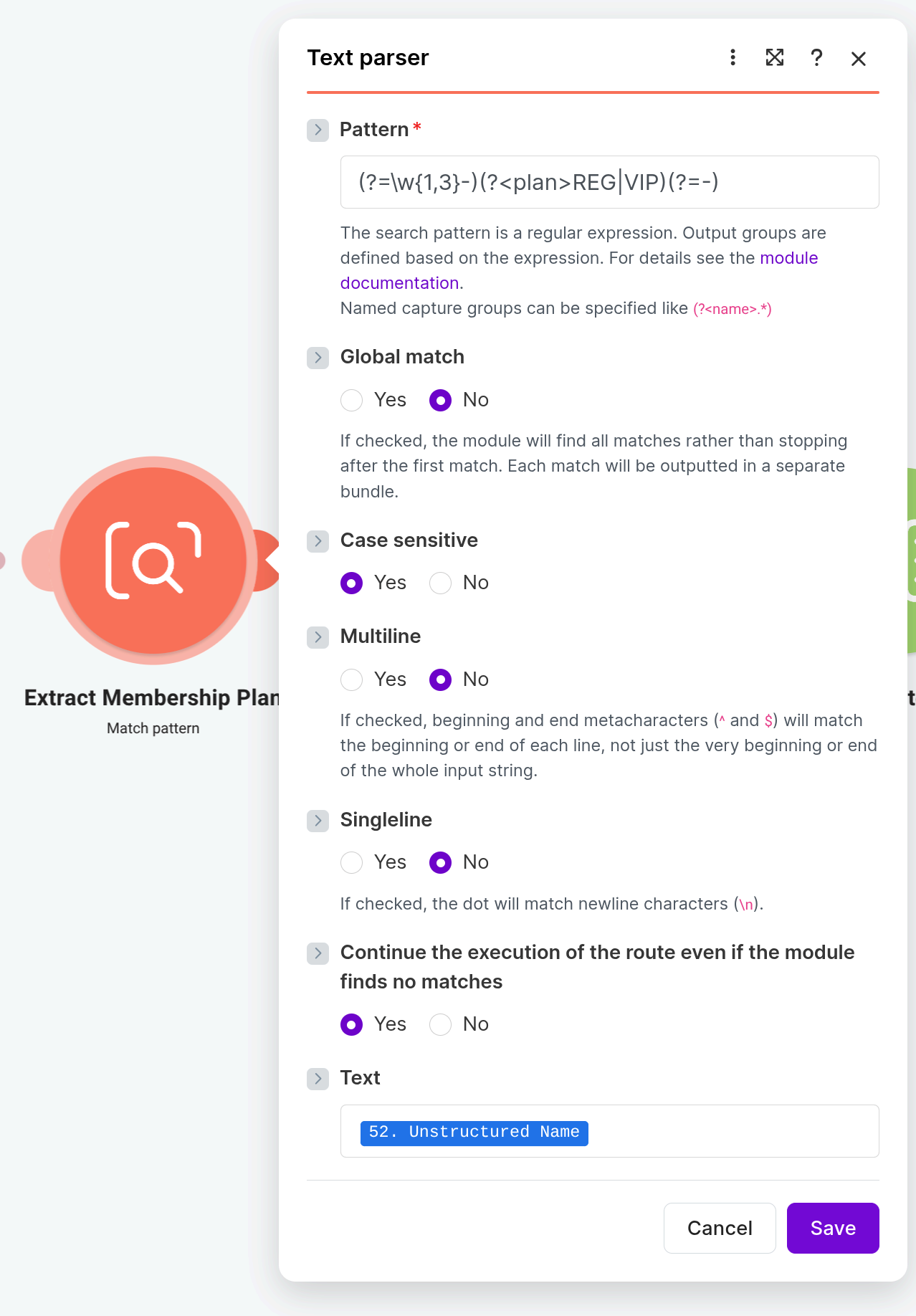
Supports multiple prefixes: ELITE_, VIP_, BASIC_, STANDARD_ etc.
05 Key benefits
The new architecture separates concerns more cleanly: Voiceflow manages conversations, Make.com handles business logic and data processing, and WhatsApp Business Cloud provides direct messaging integration. This separation makes the system more maintainable and easier to debug.
06 Next steps
The WhatsApp integration is now fully operational and tested. The following activities are recommended for ongoing success:
Short-term monitoring
Monitor message delivery and error rates for the first 2 weeks to ensure stability. The WhatsApp Business Cloud integration is new to this environment and should be watched closely.
Long-term optimization
Consider moving the membership plan detection and Google Contacts enhancement to production permanently. These improvements can be extended to other parts of the automation stack.
07 Appendix — systems & access
System access for this engagement is scoped to Twilio and Make.com only. All other platforms in the stack are reached indirectly through the Make.com scenario, or operate as managed services outside our control. This is the lens through which the investigation above was conducted.
| Make.com | Access granted |
| Twilio | Access granted |
| Meta — WhatsApp Business | No direct access |
| Mindbody | No direct access |
| Voiceflow | No direct access |
| Telegram | No direct access |